Open to work · Mixed-signal / AMS verification

I designed a chip. Silicon disagreed with my simulation, so I went and asked it why.

Recent Electrical Engineering grad from Carleton University, headed toward mixed-signal and AMS verification roles — RTL, SystemVerilog Assertions, and a fabricated CMOS chip to show I've done this past a testbench.

Location Toronto, ON — open to relocate Stack Verilog / SystemVerilog / SVA GitHub github.com/Ahsent
CH1 · PRSG OUTPUT 31-BIT MLS
5 FLIP-FLOPS · XNOR FEEDBACK PERIOD = 31
Portrait of Hussin Abdullah
HUSSIN ABDULLAH TORONTO, ON
About

From schematic to silicon, then back to the testbench

Most of my degree was simulations that behaved. The interesting part started the day I built something physical and it didn't.

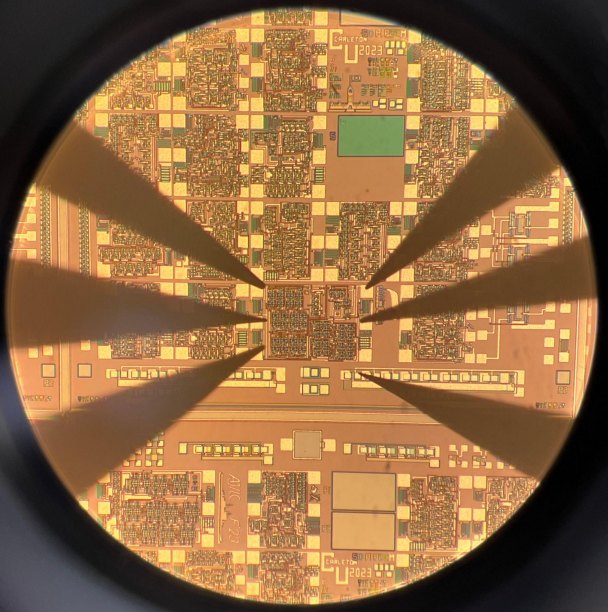
I'm an electrical engineer out of Carleton University, and the project that actually changed how I think about this field wasn't a course — it was fabricating a CMOS chip in Carleton's microfab, then sitting at a probe station with an HP 4155A trying to explain why the silicon clock didn't match my simulation. Power delivery, component tolerance, signal integrity — the answer is usually "a little bit of everything," and figuring out which bit is most of the job.

Since then I've drifted toward verification — writing the assertions and testbenches that catch that gap before it reaches silicon instead of after. I've built a PCIe transaction-layer model with a full CDC sign-off package, brought a RISC-V SoC's boot sequence down from a million-cycle hang to 2,500 cycles, and run a 27-point PVT sweep on an op-amp until I trusted every corner of it.

Right now I'm applying to mixed-signal and AMS verification roles, and paying the bills with a data-entry job where I somehow ended up writing a 32-issue defect report on a government appointment system. Old habits.

Characteristics
RTL & DIGITAL
Verilog, SystemVerilog, FSM design (Moore/Mealy), async FIFO, clock gating, sync/async reset
VERIFICATION
SVA, directed & self-checking testbenches, functional coverage, lint closure, CDC closure, waveform debug
ANALOG & IC
Full-custom CMOS, DRC/LVS, parasitic extraction, multi-finger devices, common-centroid layout, PVT analysis, 45nm SOI
PROTOCOLS
PCIe TLP, credit flow control, L0/L0s/L1, RISC-V (RV32I / PicoRV32), I2C, SPI, UART, MMIO
TOOLS
Cadence Virtuoso, Spectre, Questa/ModelSim, Verilator, Quartus, Vivado, probe station, HP 4155A, Tektronix scope
LANGUAGES
Verilog, SystemVerilog, Python, MATLAB, C/C++, Tcl, shell

Work Experience

JUN 2026 — PRESENT
Data Entry Clerk
Durham Employment and Newcomer Centre, Toronto, ON
  • Audited a new in-house appointment-management system end to end and wrote a structured 32-issue defect and improvement report, then presented findings to drive the remediation backlog.
  • Built and maintained Excel tracking databases for client follow-ups and training-funding sources, logging multi-attempt outreach with dated outcomes across all assigned accounts.
// Not a hardware role — but a verification mindset is hard to leave at home.
Selected Work

Four projects, one obsession: catching the gap between what you simulated and what you built.

Everything below is real — fabricated silicon, lint-clean RTL, and a CDC report I'd defend in an interview.

XNOR tap 1 tap 4 FF0 D Q FF1 D Q FF2 D Q FF3 D Q FF4 D Q OUT first 20 bits of the fabricated 31-bit maximal sequence
Flagship · Fabricated Silicon

Custom CMOS IC — 31-Bit Pseudo-Random Sequence Generator

Cadence Virtuoso · CuSOI Process

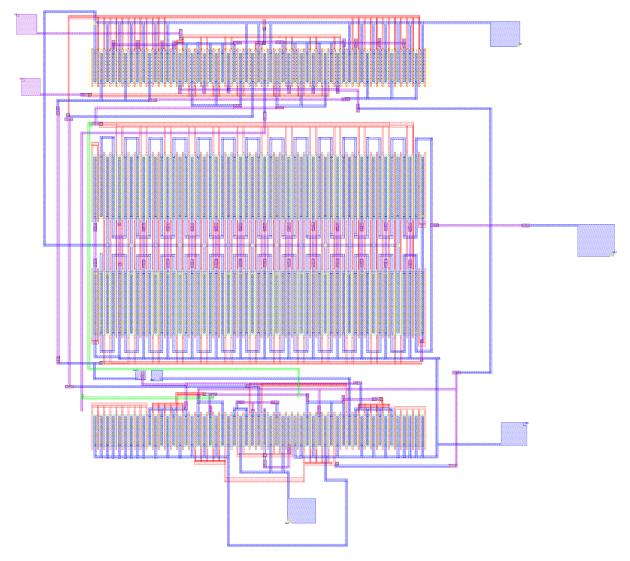
A full-custom CMOS chip, laid out transistor by transistor: five flip-flops in a Fibonacci LFSR, XNOR feedback, an on-chip RC oscillator, and a 10 mA driver to get the signal off the die. I took it from schematic to 100% DRC/LVS-clean layout, fabricated it at Carleton's microfab, then sat at a probe station and watched the real clock disagree with my simulation — the most useful debugging lesson of my degree.

100% DRC/LVS CLEAN FABRICATED & BROUGHT UP 576×576 µm
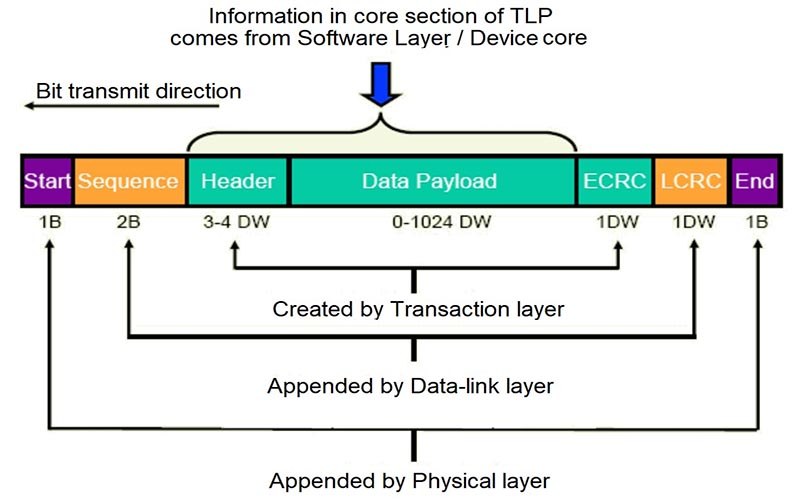
CORE · 250 MHz PHY · 125 MHz CREDIT FSM ENCODER POWER FSM L0 / L0s / L1 gating ASYNC FIFO Gray-code · 2-FF sync DECODER 5 CDC crossings, closed
Project

PCIe Transaction Layer Packet Generator & Checker

Verilog · SystemVerilog · Verilator · Questa

Five synthesizable Verilog modules implementing the PCIe transaction layer — encoder, decoder, a 6-state Moore credit-flow FSM, a power FSM with L0/L0s/L1 gating, and a dual-clock async FIFO sized off a worst-case burst analysis. Lint closed to zero warnings with no blanket waivers, every clock-domain crossing got a formal CDC writeup, and SVA in Questa verified the traffic the way an actual sign-off package gets reviewed.

0 LINT WARNINGS 5 CDC CROSSINGS CLOSED 0 SVA VIOLATIONS
PMU FSM · 6 STATES reset S0 S1 S2 S3 S4 S5 forward-only boot progression · reset is the only path back to S0
Project

RISC-V SoC Pre-Silicon Validation Platform

SystemVerilog · Questa/ModelSim · PicoRV32

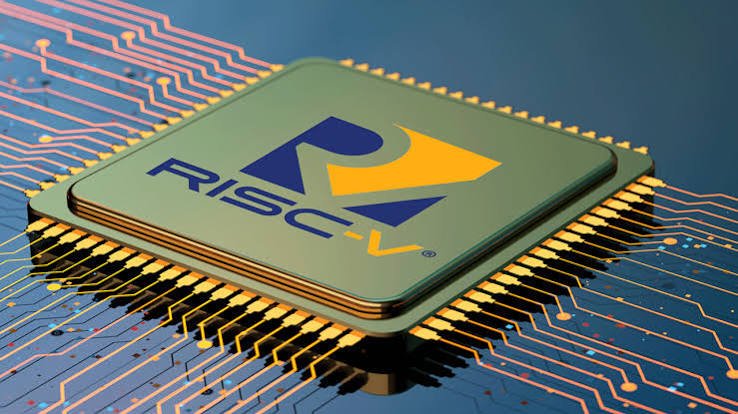
A PicoRV32 core wired into a 9-module SoC — power-management FSM, boot ROM, RAM, memory-mapped PMU registers — behind a self-checking testbench with 11 SVA assertions watching boot progression, address alignment, and PMU-state reachability. The best two hours of this project were tracing a program counter through Questa waveforms to find why boot was hanging at a million cycles, then watching it finish in 2,500.

11 SVA ASSERTIONS 100% BOOT COVERAGE 1,000,000 → 2,500 CYCLES
27-POINT PVT SWEEP FF NN SS 1.08V 1.20V 1.32V each cell: −40° · 25° · 85°C — 27/27 pass
Project

Two-Stage CMOS Operational Amplifier, 45nm SOI

Cadence Virtuoso · Spectre

A two-stage CMOS op-amp — differential pair, active-load mirrors, output buffer — sized and floor-planned as a 54-device common-centroid array to stay symmetric under mismatch. I ran it through all 27 PVT corners, three process splits by three voltages by three temperatures, and it held phase margin above 106° and gain variation under 11% everywhere I looked.

20.38 dB GAIN 110.8° PHASE MARGIN 27/27 CORNERS PASS
Outside the Lab

The rest of the spec sheet

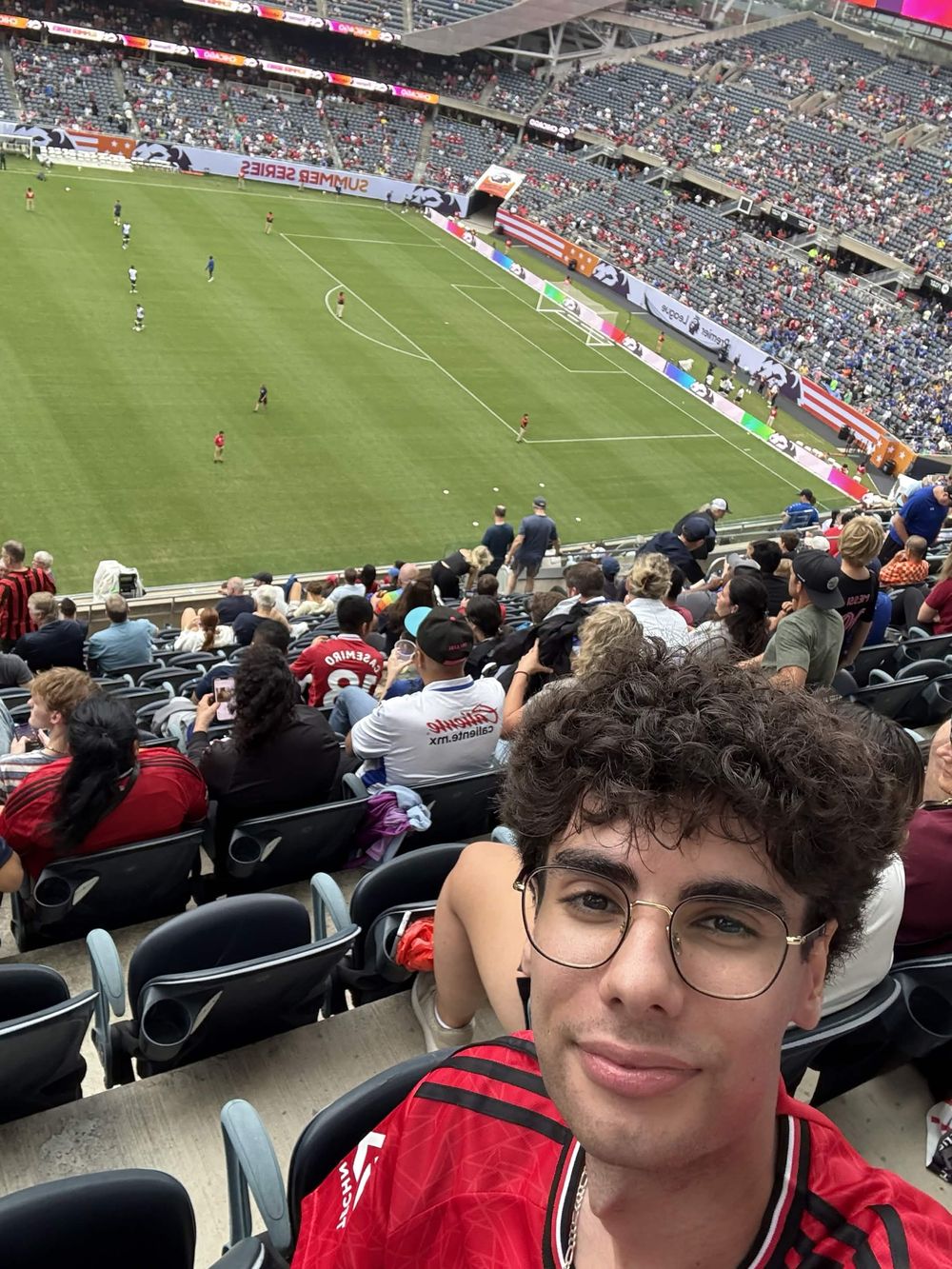
Hussin at a Manchester United match at Soldier Field in Chicago
Manchester United

Flew to Chicago for the Summer Series because some signals are worth chasing in person, not just on a waveform.

Dota 2 Immortal rank achievement screen, username Ahsent
Dota 2 — Immortal

Top ~0.1% bracket. Reading the state of a chaotic system and predicting what breaks next transfers surprisingly well to RTL.

Campfire with friends by a lake at night, Canadian flag in the background
Off the grid

Most weekends end with a fire pit, a lake, and zero spreadsheets — the best place I know to stop debugging and let an idea land.

Get in touch

Let's talk.

I'm looking for full-time mixed-signal and AMS verification roles — Toronto-based, open to relocating. If you've got a testbench that needs writing or a chip that needs bringing up, I'd like to hear about it.